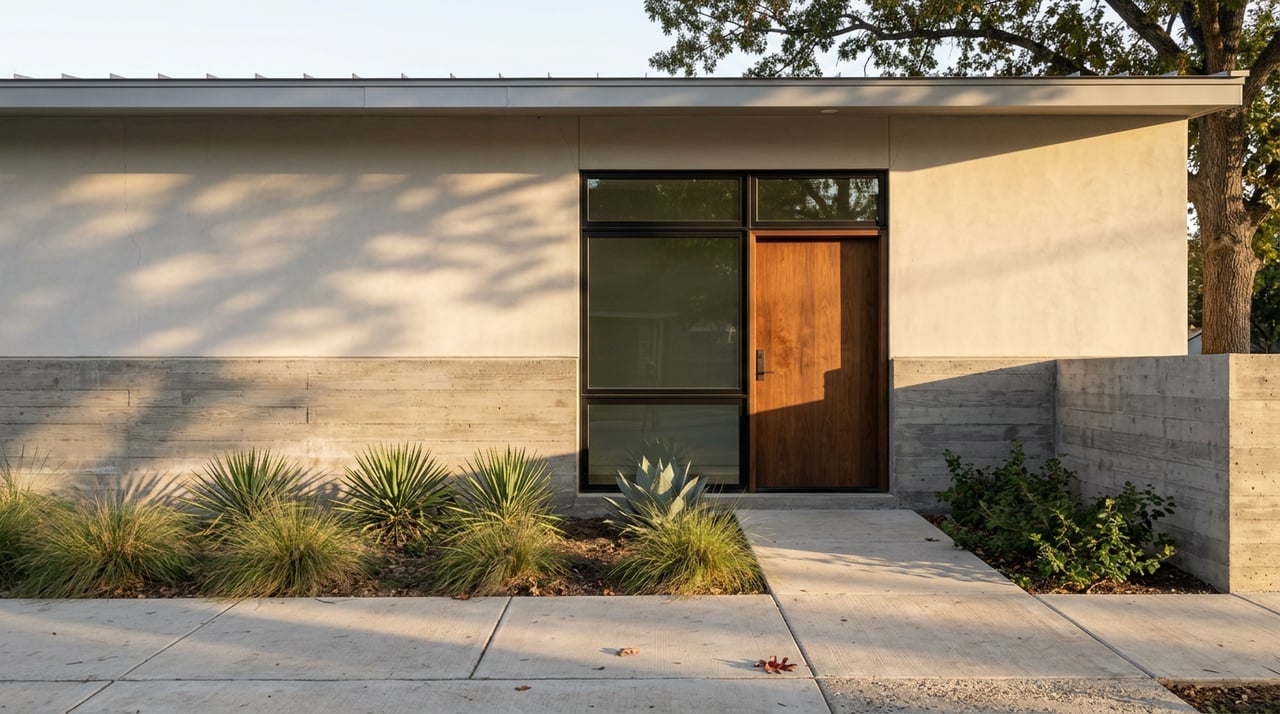
Why Barton Hills Home Prices Can Vary So Much
August 13, 2026
August 13, 2026
Zillow's tracker for Barton Hills lists an average home value of $894,731 as of its May 31, 2026 update, down 3.1 percent from a year earlier. Redfin's neighborhood page, pulled for March 2026, shows a median sale price of $1,578,750, up 54 percent year over year. Homes.com's figures for February 2026 put the median list price at $1,450,000, alongside a separate trailing twelve-month median sale figure of $1,335,000. Movoto's April 2026 read puts the median list price at $1.63 million. Realtor.com, for that same month, shows $1.52 million.
None of these numbers are wrong. They are each measuring a different slice of a small, unusually varied market, and the gap between the lowest and highest reading, roughly $700,000, is the actual story. Barton Hills isn't one housing market with a single price trend. It's four distinct products sharing a zip code, and the "median" you see on any given site depends entirely on which of the four happened to close that month.
The reason these numbers bounce around so much comes down to volume. Orchard's market report counted just 6 homes sold in its most recent 30-day window, up from 5 the year before. Redfin's June 2025 snapshot showed 23 homes sold that month, down from 27 a year earlier. When a neighborhood's entire monthly sales activity fits on two hands, a single $3 million new build or a single distressed teardown sale can swing the reported median by six figures without anything in the broader market actually changing.
That is exactly what appears to have happened between Redfin's two readings. A tracker showing $1.1 million with a June 2025 comparison later showed $1,578,750 for March 2026, a 54 percent jump. Prices in Central Austin did not rise 54 percent in nine months. The mix of what sold did.
Here is what that mix actually looks like, source by source:
| Source | Period | Stat reported |
|---|---|---|
| Zillow (ZHVI) | as of 5/31/2026 | $894,731 average value, down 3.1% YoY |
| Redfin | Mar 2026 | $1,578,750 median sale, up 54% YoY |
| Homes.com | Feb 2026 | $1,450,000 median, $1,490,794 average sale |
| Homes.com | trailing 12 mo. | $1,335,000 median sale, up 16% YoY |
| Movoto | Apr 2026 | $1.63M median list, $596/sq ft |
| Realtor.com | Apr 2026 | $1.52M median list, $590/sq ft |
| Orchard | trailing 30 days | $1,322,500 median sale, $624.41/sq ft, 6 homes sold |
Every row is accurate. None of them describes "the" Barton Hills market, because there isn't one.
The land play. A share of what sells in Barton Hills is barely about the house at all. One active listing found in the neighborhood's inventory sits at the end of a cul-de-sac on an elevated lot bordering the Barton Creek Greenbelt. The listing describes the home as habitable but with considerable deferred maintenance, offered as-is, with the agent noting plainly that "value is in the land and the location." This isn't unusual here. Both Austin Real Estate's neighborhood page and Cain Realty Group's listing site independently note that tearing down older homes to build new is a long-standing pattern in Barton Hills, where original stock dates mostly to the late 1950s through the mid-1970s, with a handful of homes from the early 1930s. A land-value sale and a move-in-ready sale can close in the same month, in the same three-block radius, at prices that have almost nothing to do with each other.
The original ranch house. Then there's the untouched or lightly updated mid-century home, still on its original footprint. A one-story built in 1965 at 2504 Wildgrove Drive is listed at $1,250,000 for 1,816 square feet, or $688 per square foot. That number sits well below what a new build commands per square foot, but well above a raw land price, because the home is functional and livable even if it hasn't been rebuilt.
The ground-up rebuild. A few streets over, new construction tells a completely different story. A 2026-built home at 2141 Barton Hills Drive spans 4,741 square feet at $833 per square foot, putting the list price near $3.95 million. Another new build nearby, at 2404 Arpdale Street, runs 3,918 square feet at $830 per square foot. Builders active in the neighborhood right now include Joseph Design Build, with a modern home slated for fall 2026 completion, and Hayes Builders, one of the area's LEED-certified builders working on a cul-de-sac lot near the Greenbelt. These homes anchor the top of the reported "average," and there are enough of them moving through Barton Hills each year to pull a thin-volume median substantially higher whenever one or two close in the same window.
The attached unit. At the other end sits the neighborhood's condo and townhome stock, mostly older and smaller. A one-bedroom unit built in 1971 in the Zilker Flats condos is listed at $469,900, or $445 per square foot, for 1,056 square feet. Communities like One Barton Place, a gated, key-entry building perched above the Greenbelt, and Habidad Condos, a gated townhome community steps from the Greenbelt trailhead, fall into this same category: shared walls, community pools, HOA dues, and a price-per-square-foot that runs well under half of what a new-construction rebuild commands.
Line those four up and the spread is stark: $445 per square foot for an older condo unit against $833 per square foot for a brand-new build, both inside the same reported neighborhood boundary.
The same mixing problem shows up in how long homes sit. Redfin's tracker puts average time on market around 52 to 61 days. Homes.com reports 68 to 79 days depending on the pull, while a separate April 2026 read citing Realtor.com data shows 82 days. Movoto's April 2026 figure is 95 days. Orchard shows a median of 51 days, up sharply from 25 days a year earlier.
This isn't measurement error. It's the same four segments moving at different speeds. A turnkey rebuild or a freshly updated condo can go under contract in three or four weeks if it's priced right. A land-value listing waiting for the right builder to recognize the lot, or an original-condition ranch house that needs a buyer willing to take on the renovation, can sit for months. Blend those timelines into one "average days on market" and you get a number that describes no actual listing in the neighborhood.
If you're sizing up Barton Hills against another Central Austin neighborhood, the headline median price is close to useless on its own. The more useful question is which of the four products you're actually comparing. A $1.5 million rebuild in Barton Hills and a $1.5 million rebuild in a neighboring pocket are a fair comparison. A $1.5 million rebuild against a $1.5 million original-condition ranch house is not, even if both carry the same neighborhood name and the same reported "median."
The same logic applies in reverse if you're pricing a home to sell here. A seller with a fully renovated modern home who anchors to a blended median that's being dragged down by original-condition and condo sales will underprice. A seller with a 1960s ranch house who anchors to a median inflated by a couple of new-construction closings will sit unsold well past the neighborhood's typical timeline, then face the price reduction that follows. Knowing which of the four Barton Hills markets a specific property actually belongs to, before choosing a number, is most of the pricing work.
Is Barton Hills getting more expensive or less expensive right now? It depends entirely on which segment you're watching. Zillow's broad value index was down slightly as of its May 2026 update, while Redfin's and Orchard's closed-sale medians jumped sharply because a handful of higher-priced rebuilds closed within their small sample windows. Both can be true at once.
How do I tell which of the four categories a listing falls into? Start with the build year, lot condition notes, and price per square foot relative to the ranges above. A listing priced well under $500 per square foot with an older build year is likely attached or original-condition. Anything approaching $800 or more per square foot on a recent build year is a ground-up rebuild.
Does this same pattern show up in other Austin neighborhoods? Any close-in Austin neighborhood with a mix of original stock, teardown activity, and new construction will show some version of this. Barton Hills is a clear example because all four segments, including a meaningful stock of Greenbelt-adjacent condos, are represented in real numbers within the same small monthly sales count.
If you're trying to figure out what a specific Barton Hills property is actually worth, or how to price one so it doesn't get lost in a blended median that has nothing to do with your home, Kevin Haines can walk through the comparable sales that actually match your property type. Schedule Your Free Consultation to get pricing built on the right comps, not the wrong average.
Stay up to date on the latest real estate trends.
Whether selling or buying, Kevin's clients appreciate his down-to-earth attitude and his commitment to ensuring every transaction is smooth and successful.