Why Barton Hills Deals Get Renegotiated Around Day Five
August 20, 2026
August 20, 2026
Ask a Barton Hills seller what almost derailed their sale, and the answer rarely involves price. It involves a phone call from their agent sometime around day five of the option period, after the buyer's inspector has been through the house and a specialist has been called in to look at something specific. Two things trigger that call more than anything else in this neighborhood, and neither one is the thing most sellers spent their prep time worrying about.
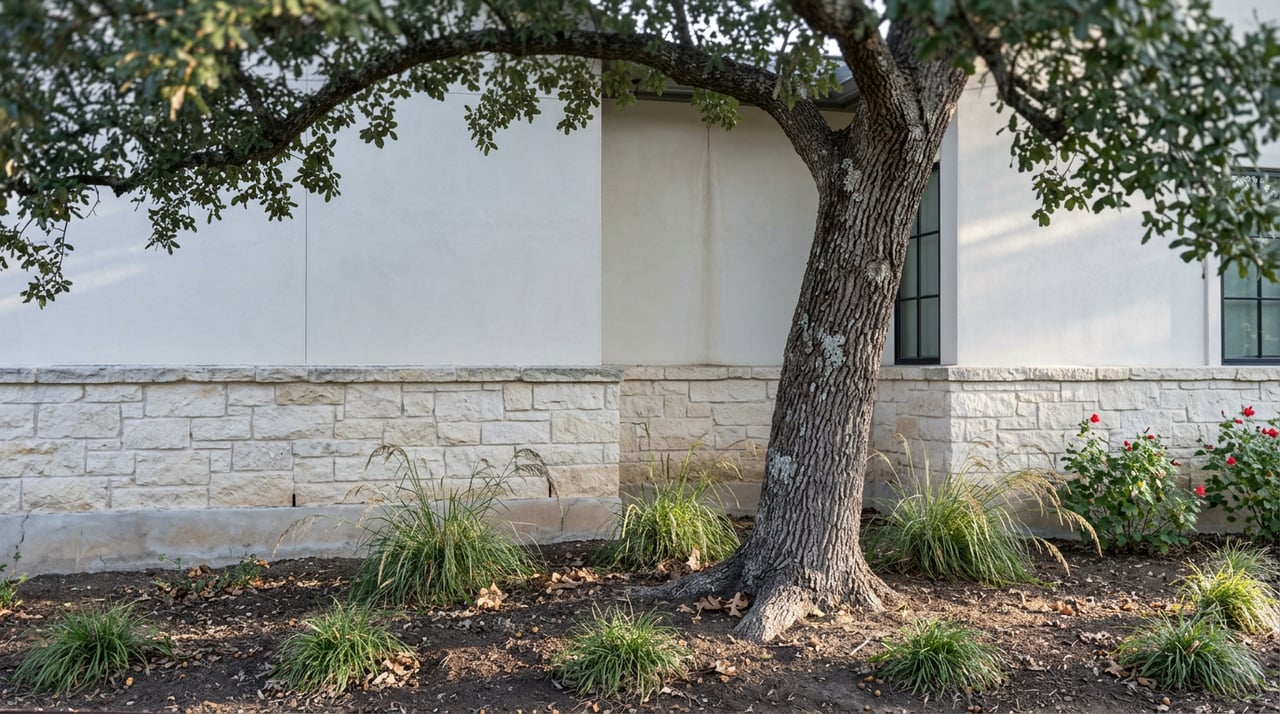
The first is the foundation. The second is a tree the seller has walked past for twenty years without a second thought.
Most Austin foundation advice starts with the same premise: expansive clay soil swells when it rains and shrinks during drought, and that constant movement is what cracks slabs east of I-35. That story is accurate for the Blackland Prairie clay under much of East Austin, where the soil's plasticity index regularly tops 40 and can change volume by as much as 15 percent between its driest and wettest states.
Barton Hills sits somewhere else. The neighborhood, along with Zilker and South Lamar, falls right at the transition between the Blackland Prairie and the Edwards Plateau, where shallow limestone bedrock sits under a thin layer of clay and caliche. That transition means two lots on the same block, or two corners of the same lot, can behave completely differently underfoot. The bedrock generally makes homes here less prone to the dramatic shrink-swell cycles that define the clay narrative, but it introduces a different problem: the rock makes pier installation harder and more expensive, and the hilly terrain concentrates rainwater runoff against foundations instead of letting it drain evenly.
Here's what that looks like side by side:
| Blackland Prairie (much of East Austin) | Edwards Plateau transition (Barton Hills) | |
|---|---|---|
| Primary soil | Deep expansive clay, plasticity index 40+ | Shallow limestone bedrock, thin clay/caliche overlay |
| Movement pattern | Clay shrinks in drought, swells with rain | Runoff concentrates on slopes; pier installation complicated by rock |
| Typical repair cost | Varies, often tied to deep pier systems | $4,000 to $15,000, most homeowners land between $5,500 and $10,000 |
| Common fix | Deep steel or concrete piers | Steel piers ($1,000 to $1,500 each) or polyurethane foam leveling ($2,000 to $5,000) |
Barton Hills lots can behave differently from one another, so documenting what's happening under the slab can help sellers address foundation questions with more context.
A general home inspection in Austin typically runs $350 to $600 and covers the whole house in two to four hours. If the inspector flags anything that looks like foundation movement, sticking doors, a diagonal crack near a window, uneven flooring, the buyer's next move is usually a dedicated structural engineer evaluation, which costs $150 to $400 and produces a report that becomes the negotiating document for both sides.
The Texas Property Code requires sellers to disclose any known foundation repairs on the Seller's Disclosure Notice, which means anything you've already had fixed needs to be on paper before a buyer's engineer ever sets foot on the property. If your only documentation is a memory of a repair from eight years ago, you're negotiating from a weaker position than a seller who has an engineer's letter in hand.
Barton Hills was established in the 1940s and 1950s, with construction continuing through the 1970s and on into the late 1990s. The oldest of those decades produced the slab-on-limestone homes that carry the foundation quirks above, and the same stretch of years grew the live oak canopy that makes the neighborhood recognizable today. Many of those oaks are now decades old, and plenty exceed the diameter thresholds that put them under the City of Austin's tree protections.
The rules are specific. Any tree of any species with a trunk diameter of 19 inches or more, measured 4.5 feet above the ground, is a protected tree. Certain species, including live oak, pecan, cedar elm, Texas ash, and bald cypress, get stronger protection once they reach 24 inches, making them heritage trees. For a buyer or seller, that distinction matters in a few concrete ways:
None of this means a heritage tree hurts your home's value. The Austin Heritage Tree Foundation is explicit that the ordinance is built around flexibility and preservation, not restriction for its own sake, and a mature canopy is consistently one of the things buyers say they love about this part of Austin. What it does mean is that a buyer who is picturing an addition, a pool, or a full rebuild on a Barton Hills lot may not realize until they're already under contract that the oak anchoring their dream floor plan can't legally come down. If you've priced your listing partly on its teardown or expansion potential, an undisclosed heritage tree is the single biggest variable standing between that buyer's plan and reality.
Texas option periods are typically running 7 to 10 days across the Austin market this year, a longer window than the 5-to-7-day periods buyers accepted during more competitive stretches of the cycle. The mechanics are consistent: the buyer pays a negotiated option fee, usually $100 to $500, for the unrestricted right to walk away for any reason under the Texas Real Estate Commission's standard resale contract. Inspections generally happen in the first day or two. Days three through five are when the buyer reviews the report and decides whether to bring in specialists, a structural engineer, an arborist, anyone who can put a number on what the general inspector flagged. Days five through eight are when repair requests show up as a formal amendment. By day eight to ten, the buyer has to decide whether to proceed, negotiate, or terminate.
That means a foundation question and a tree question, if they're both unresolved, tend to surface at exactly the same point in the calendar, right when the buyer's leverage to ask for credits or walk away is highest. By July 2026, Austin's resale market was averaging 89 days on market with more than 12,000 active listings, conditions that give buyers real room to negotiate rather than accept ambiguity. Refusing reasonable repair requests in this kind of market often just sends the home back to active status with the quiet stigma of a fallen-through deal attached to it.
Worth knowing if you're counting days closely: Texas real estate contracts were updated effective July 1, 2026, with a formal definition of legal holidays for option period and earnest money deadlines, a small but real change to how those calendar days get counted this year.
The sellers who move through this window cleanly are the ones who show up with answers instead of waiting for questions. A structural engineer's pre-listing evaluation, the same $150 to $400 report a buyer would eventually order anyway, turns an ambiguous crack into a documented, bounded issue before anyone's clock is running. A certified arborist's walk of the property does the same thing for the canopy: which trees are protected, which are heritage, what the critical root zone looks like for any future owner's plans. Both documents cost little relative to what they protect, and both replace a buyer's worst-case guess with your own paper trail.
This matters even more if you're not local to Austin day to day. An out-of-state owner can't drive over to meet the structural engineer or walk the lot with an arborist between showings. Coordinating both ahead of listing, so the reports are already sitting in the file when a buyer's inspector shows up, is exactly the kind of groundwork that keeps a remote sale from stalling at day five.
Does having a heritage tree lower my home's resale value? No. The ordinance is designed around preservation with flexibility, and a mature canopy is routinely cited as one of the draws of this part of Austin. It does limit what a buyer can do with the lot, which matters if your marketing leans on expansion or rebuild potential.
Am I required to disclose a past foundation repair? Yes. Texas law requires known foundation repairs to be listed on the Seller's Disclosure Notice
How long do I actually have once we're under contract? Most Austin option periods this year run 7 to 10 days.
If you're weighing a listing in Barton Hills and want the foundation and tree questions answered before a buyer's inspector ever raises them, Kevin Haines can walk you through exactly which vendors to call first and in what order. Schedule your free consultation to get started.
This article is general information, not legal, tax or financial advice. Consult a qualified professional about your situation.
Stay up to date on the latest real estate trends.

Whether selling or buying, Kevin's clients appreciate his down-to-earth attitude and his commitment to ensuring every transaction is smooth and successful.